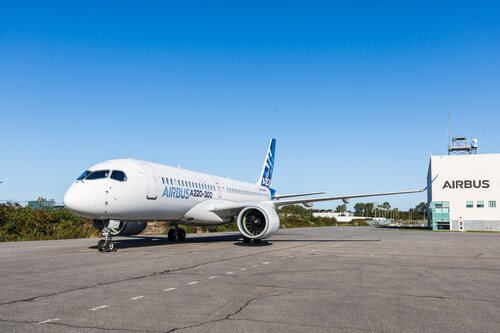
Airbus is unveiling “A220: The Maverick,” a new four-part documentary series that takes viewers behind the scenes of the A220 program as never before.Designed for anyone curious about what happens inside an aircraft assembly site, the series explores everything from the A220’s design to the airlines that have made it a cornerstone of their fleet-renewal strategies.
Across four episodes, viewers will discover:
Episode 1 – “Designed to Redefine”: A tour of the Mirabel assembly site and a look at what made it possible to create this small single-aisle aircraft with long-haul capabilities.
Episode 2 – “Closer than ever”: how the A220 played a decisive role for QantasLink in connecting regional communities with major cities.
Episode 3 – “From coast to coast”: the passenger experience revisited by Air Canada.
Episode 4 – “Strength in the Skies”: the ambitious integration of the A220 into the LOT Polish Airlines fleet.
Featuring never-before-seen footage and exclusive interviews, “A220: The Maverick” is sure to captivate both aviation experts and enthusiasts.
OAKVILLE, ON, Dec. 17, 2025 /CNW/ – Siemens Canada is partnering with Airbus for a comprehensive decarbonization and energy efficiency project at Airbus’ A220 final assembly plant in Mirabel, Quebec. This collaboration is one of several key components of Airbus’ program to minimize the company’s operational environmental footprint through targeted reductions in CO2 emissions and energy consumption.
Siemens Canada Partners with Airbus (CNW Group/Siemens Canada)
The project underscores Airbus’ purpose to pioneer sustainable aerospace and supports the company’s ambitious environmental targets. Through its programme to reduce its global operational environmental footprint, Airbus has put in place targets to reduce overall Scope 1 & 2 greenhouse gas (GHG) emissions by 85%, and decrease energy consumption by 20% by 2030. Siemens Canada’s expertise is instrumental in helping Airbus achieve these goals as they relate to the 1.5-million-square-foot Mirabel facility, delivering value while not disrupting daily operations at the plant.
Upon completion, the project is expected to deliver considerable benefits for Airbus, including an estimated ~50% reduction in CO2 emissions energy consumption and ~25% decrease in associated energy costs at the Mirabel final assembly plant. The initiative will help modernize Airbus’ mechanical infrastructure and building automation systems. It will also help improve user comfort within the facilities while leveraging proactive collaboration with Hydro-Québec to maximize subsidies and credits related to demand response during the winter.
“This partnership underscores Siemens’ commitment to transforming Canadian industries with scalable solutions that drive environmental stewardship, sustainable development and economic efficiency,” said Faisal Kazi, President and CEO of Siemens Canada. “We value the trust the Airbus team has put in Siemens to help them achieve their CO2 emission reduction targets in Canada.”
Key initiatives to be implemented by Siemens Canada to support Airbus in working towards the company’s decarbonization goals include:
Increasing energy productivity and lowering operating costs through rate optimization, implementation of energy efficiency measures and managing power demand in winter.
Installing a state-of-the-art electric steam boiler, which will significantly reduce GHG emissions and provide approximately 100% humidification redundancy critical for Airbus’ manufacturing process.
Optimizing the operation of the facility’s current incinerator and strategically prioritizing electricity use during off-peak hours to minimize natural gas consumption.
Optimizing the HVAC system by minimizing the use of existing gas-fired air-heaters, and introducing passive heat recovery combined with heat pumps for heating and partial cooling.
Upgrading an existing transformer and adding an additional transformer to offer enhanced capabilities for decarbonization.
Participating in the Hydro-Québec Demand Response Option Program.
The collaboration between Siemens and Airbus marks a tangible step towards operational efficiency for the Mirabel A220 production facility and showcases a practical model for industrial decarbonization.
About Siemens Canada
Siemens Canada is a leading technology company focused on industry, infrastructure, mobility and healthcare. The company’s purpose is to create technology with purpose, transforming the everyday, for everyone, since 1912. By combining the real and the digital worlds, Siemens empowers its customers to accelerate their digital and sustainability transformations, making factories more efficient, cities more liveable, and transportation more sustainable. A leader in industrial AI, Siemens leverages its deep domain know-how to apply AI – including generative AI – to real-world applications, making AI accessible and impactful for customers across diverse industries. Siemens also owns a majority stake in the publicly listed company Siemens Healthineers, a leading global medical technology provider pioneering breakthroughs in healthcare. For everyone. Everywhere. Sustainably. In fiscal 2025, which ended September 30, 2025, Siemens Canada had revenues of approx. $2.3 billion CAD. The company has approximately 4,600 employees from coast-to-coast and 38 office and production facilities across Canada.
Airbus is unveiling “A220: The Maverick,” a new four-part documentary series that takes viewers behind the scenes of the A220 program as never before.Designed for anyone curious about what happens inside an aircraft assembly site, the series explores everything from the A220’s design to the airlines that have made it a cornerstone of their fleet-renewal strategies.
Across four episodes, viewers will discover:
Episode 1 – “Designed to Redefine”: A tour of the Mirabel assembly site and a look at what made it possible to create this small single-aisle aircraft with long-haul capabilities.
Episode 2 – “Closer than ever”: how the A220 played a decisive role for QantasLink in connecting regional communities with major cities.
Episode 3 – “From coast to coast”: the passenger experience revisited by Air Canada.
Episode 4 – “Strength in the Skies”: the ambitious integration of the A220 into the LOT Polish Airlines fleet.
Featuring never-before-seen footage and exclusive interviews, “A220: The Maverick” is sure to captivate both aviation experts and enthusiasts.
Airbus is unveiling “A220: The Maverick,” a new four-part documentary series that takes viewers behind the scenes of the A220 program as never before.Designed for anyone curious about what happens inside an aircraft assembly site, the series explores everything from the A220’s design to the airlines that have made it a cornerstone of their fleet-renewal strategies.
Across four episodes, viewers will discover:
Episode 1 – “Designed to Redefine”: A tour of the Mirabel assembly site and a look at what made it possible to create this small single-aisle aircraft with long-haul capabilities.
Episode 2 – “Closer than ever”: how the A220 played a decisive role for QantasLink in connecting regional communities with major cities.
Episode 3 – “From coast to coast”: the passenger experience revisited by Air Canada.
Episode 4 – “Strength in the Skies”: the ambitious integration of the A220 into the LOT Polish Airlines fleet.
Featuring never-before-seen footage and exclusive interviews, “A220: The Maverick” is sure to captivate both aviation experts and enthusiasts.
Toulouse, France, 1 December 2025 – Following the publication of an Alert Operators Transmission (AOT) on 28 November calling for immediate precautionary action on a number of in-service A320 Family aircraft, Airbus is providing an update on the status of the deployment of these measures across the global fleet.
Out of a total number of around 6,000 aircraft potentially impacted, the vast majority have now received the necessary modifications. We are working with our airline customers to support the modification of less than 100 remaining aircraft to ensure they can be returned to service.
Airbus apologises for any challenges and delays caused to passengers and airlines by this event. The Company thanks its customers, the authorities, its employees and all relevant stakeholders involved for their support in implementing these measures, and for their understanding of Airbus’ decision to put safety above all other considerations.
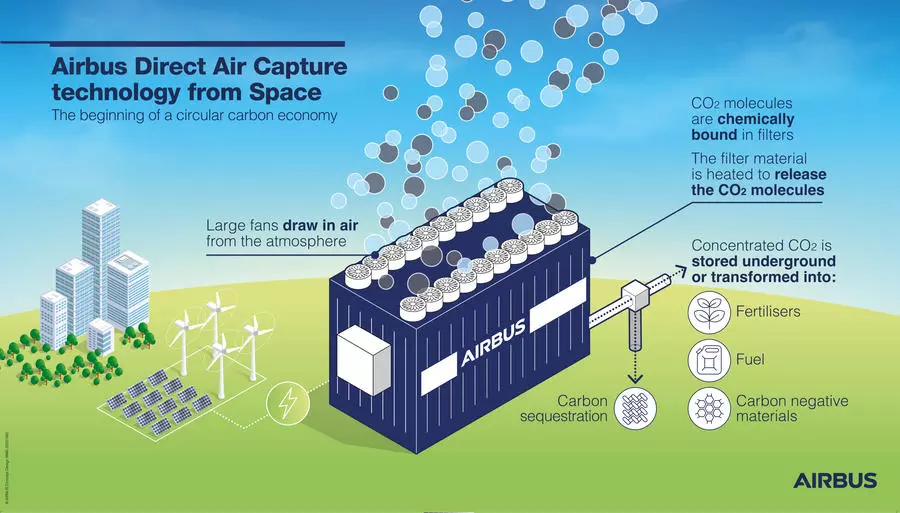
MONTRÉAL (NOVEMBER 27 2025) — Deep Sky, the Canadian carbon removal project developer, is deploying Direct Air Capture (DAC) technology developed by Airbus, Europe’s largest aerospace company, at Deep Sky’s flagship facility, Deep Sky Alpha, in Innisfail, Alberta, Canada. The DAC unit has the capacity to remove 250 tons of CO2 per year and was successfully delivered recently after only eight months of engineering and manufacturing.
The modular hardware unit captures carbon dioxide from ambient air. Its technology is derived from Airbus (Defence and Space) life-support systems aboard the International Space Station, and was brought to market in 2023. The system inside the module employs a solid amine-based filter to capture CO2, which is then heated to release highly concentrated CO2 while returning CO2 lean air to the atmosphere. In addition to this temperature swing process, the energy system to operate the module is uniquely designed to recover the input energy and optimize energy consumption.
“In order for carbon dioxide removal to have an impact, we need to develop technologies that can rapidly scale to remove billions of tons of CO2 from the atmosphere,” said Alex Petre, CEO of Deep Sky. “We’re incredibly pleased to be hosting Airbus technology in Canada and look forward to a continued partnership in the future.”
As a project developer, Deep Sky is actively deploying expansive carbon removal and storage infrastructure across Canada. It is incorporating leading carbon dioxide removal and sequestration technologies to scale up a portfolio of solutions.
The company’s first facility, Deep Sky Alpha, began operating earlier this year. It serves as the world’s first carbon removal innovation and commercialization center, hosting multiple DAC technologies for piloting and optimization, while also producing CDR credits. With the addition of Airbus, Deep Sky has secured partnerships with multiple DAC providers to deploy their technology at Deep Sky Alpha, including Airhive, Phlair, MissionZero, Skyrenu, Skytree, Carbon Capture Inc. and GE Vernova.
The deployment of the modules signals Deep Sky’s strong momentum. In December 2024, Deep Sky secured a USD $40 million grant commitment from Breakthrough Energy Catalyst – their first-ever investment in both a Canadian and Direct Air Capture project. In November 2024, the company announced founding carbon removal credit buyers Royal Bank of Canada and Microsoft, who committed to purchase 10,000 tonnes of CO2 removal over a 10-year period, with options for up to 1 million additional tonnes from Deep Sky’s pipeline of commercial projects.
About Deep Sky
Montreal-based Deep Sky is the world’s first tech-agnostic carbon removal project developer aiming to remove gigatons of carbon from the atmosphere and permanently store it underground. As a project developer, Deep Sky brings together the most promising direct air carbon capture technologies under one roof to bring the largest supply of high-quality carbon credits to the market, commercializing and catalyzing carbon removal and storage solutions like never before. With $130M in funding, Deep Sky is backed by world class investors including Investissement Québec, Brightspark Ventures, Whitecap Venture Partners, OMERS Ventures, BDC Climate Fund, BMO, National Bank of Canada, Breakthrough Energy Catalyst, and more. For more information, visit deepskyclimate.com
Airbus is unveiling “A220: The Maverick,” a new four-part documentary series that takes viewers behind the scenes of the A220 program as never before.Designed for anyone curious about what happens inside an aircraft assembly site, the series explores everything from the A220’s design to the airlines that have made it a cornerstone of their fleet-renewal strategies.
Across four episodes, viewers will discover:
Episode 1 – “Designed to Redefine”: A tour of the Mirabel assembly site and a look at what made it possible to create this small single-aisle aircraft with long-haul capabilities.
Episode 2 – “Closer than ever”: how the A220 played a decisive role for QantasLink in connecting regional communities with major cities.
Episode 3 – “From coast to coast”: the passenger experience revisited by Air Canada.
Episode 4 – “Strength in the Skies”: the ambitious integration of the A220 into the LOT Polish Airlines fleet.
Featuring never-before-seen footage and exclusive interviews, “A220: The Maverick” is sure to captivate both aviation experts and enthusiasts.
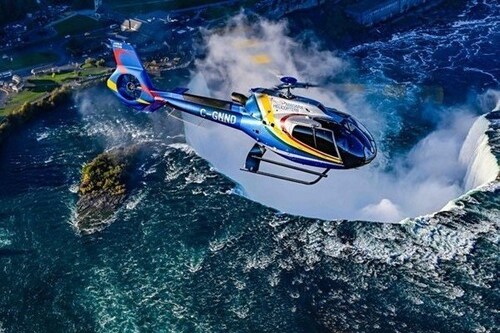
FORT ERIE, ON, Oct. 31, 2025 /CNW/ – Airbus Helicopters in Canada is marking an important fleet modernisation milestone with Niagara Helicopters, as the operator celebrates four Airbus H130 helicopters that will support their aerial tourism operations. The completion of the fleet renewal, initially announced in 2024, supports Niagara Helicopters’ continued delivery of premium aerial tour experiences over the internationally-renowned Niagara Falls landmark.
Niagara Helicopters celebrates fleet modernization milestone with four Airbus H130s (CNW Group/Airbus)
The new fleet of four H130s was celebrated alongside employees, guests, and community leaders at a ceremony at the Airbus Helicopters facility in Fort Erie. The H130 combines excellent visibility for passengers and a spacious cabin with a low acoustic footprint, a critical feature for operations near environmentally sensitive and highly-visited sites like Niagara Falls.
“For more than 60 years, Niagara Helicopters has showcased the beauty of Niagara Falls from above, and our priority is ensuring every passenger experiences it at its very best,” said Anna Pierce, Vice President and General Manager for Niagara Helicopters. “The H130 is the ideal aircraft for our operation – offering comfort, visibility, and performance that allows us to deliver truly memorable tours.”
“This moment represents the continuation of a trusted relationship built on partnership, proximity, and shared pride for Canadian aviation,” said Dwayne Charette, President of Airbus Helicopters in Canada. “We are honoured that these Airbus helicopters – which are completed right here in Fort Erie by our skilled team – continue to play a role in the Niagara story. We are proud to be a part of this ‘Made in Niagara’ success.”
The renewed fleet further strengthens safe, reliable, and customer-focused operations in the region. Niagara Helicopters has flown millions of passengers from across the globe and remains one of Canada’s most iconic tourism experiences.
The H130 is recognized as the benchmark helicopter for tourism operations. The single-engine helicopter is equipped with a Safran Arriel 2D engine and the Airbus signature Fenestron shrouded tail rotor which contributes significantly to reduced external sound. The combination of advanced technology and high visibility seating for up to seven passengers makes the H130 a favourite among operators worldwide for tourism, air ambulance, and surveillance missions.
Ottawa, Canada, September 4, 2025 – Airbus Defence and Space today announced a strategic financial investment in Quebec-based IPR Innovative Products Resources Inc. (IPR). This funding will drive IPR’s research and development, fostering new intellectual property and creating high-tech jobs.
The investment supports Airbus’ commitments under Canada’s Industrial and Technological Benefits (ITB) Policy as part of the Strategic Tanker Transport Capability (STTC) acquisition programme.
“Advancing innovation in Canada’s industrial base is key to our nation’s economic prosperity,” said the Honourable Mélanie Joly, Minister of Industry and Minister responsible for Canada Economic Development for Quebec Regions. “This Airbus investment in Innovative Products Resources Inc., made under the Industrial and Technological Benefits Policy, will drive R&D in Canada’s aerospace sector while creating high-tech jobs and generating economic and industrial benefits across Canada.”
The STTC acquisition programme includes four new Airbus A330 Multi-Role Tanker Transport (MRTT) aircraft and the conversion of five used A330-200s. This fleet is designed to replace Canada’s aging CC-150 Polaris (A310 MRTT) fleet, and will support air-to-air refuelling operations, military personnel and cargo airlift, medical evacuations, as well as strategic transport of Government of Canada officials.
“IPR’s patented structural health monitoring technologies are particularly impressive, aligning perfectly with Airbus’ mission to pioneer sustainable and safe aerospace solutions,” said Jean-François Godbout, Managing Director, Airbus Defence and Space Canada. “This partnership, supported by our Testia subsidiary and firmly rooted in our commitment to Canada’s Industrial and Technological Benefits (ITB) policy, confirms Airbus’s dedication to engaging with Canadian industry for the development, production, and support of advanced products and services across civil and military aviation and space applications.”
Airbus subsidiary Testia, a leader in structural integrity services, will support the development and certification of these aerospace solutions. This collaboration is set to accelerate the development of Structural Health Monitoring (SHM), a category of sensing technology that monitors loading history and fatigue damage in aircraft, vessels, structures and machinery.
“Taking an industry-leading role alongside Airbus and Testia is a significant step for us,” said Paul D. Okulov, Ph.D., President & CTO, IPR Innovative Products Resources. “They continue to support our efforts to advance public safety in aerospace and other industries, increase our innovation capacity, and bring novel ideas to market. This investment accelerates our mission to deliver cutting-edge structural health monitoring and sensing technologies that will benefit not only aerospace but also vital infrastructure sectors across Canada and beyond.”
In addition to aerospace, IPR plans to extend these innovations to critical infrastructure like roads, bridges, power plants, railways, and oil and gas facilities, heavy equipment, and machinery, with ongoing certification guidance from Testia.
In Canada, Airbus has a significant presence with over 5,000 employees, including over 4,000 in Quebec, at ten sites and offices, generating over C$2.5 billion in annual revenues for more than 850 Canadian companies.
For more information on the A330 MRTT, visit our website.
Mirabel, Canada, 25 August 2025 – An Air France Airbus A220 today completed its delivery flight from Airbus’ site in Mirabel to Paris powered by sustainable aviation fuel (SAF).
This marked a significant step forward: Airbus in Canada directly issued official sustainability credentials for SAF to a customer for the first time.
This landmark flight not only confirms Airbus’ capability to provide Proofs of Sustainability (PoS) directly to customers and operators but also supports the industry’s commitment to decarbonisation. With PoS credits for a 50% SAF blend applied through the mass balance process, this ferry flight conducted by Air France’s 46th A220-300 named “VAISON-LA-ROMAINE”, represented more than 25 tonnes reduction in lifecycle greenhouse gas (GHG) emissions compared to fossil fuels.
“Fleet renewal and the use of sustainable aviation fuel are the two main levers of the decarbonization of aviation. Combining the two is only logical and Air France-KLM is proud to participate in this Airbus milestone with the delivery flight of one of our A220s. Air France-KLM is among the world’s largest buyers of SAF. Directly receiving SAF at delivery is a game-changer, increasing transparency and driving industry progress,” said Blaise Brigaud, SVP Group Sustainability, Air France-KLM.
Since the announcement of the first sustainable aviation fuel (SAF) delivery at Airbus site in Canada, enabling the Mirabel teams to use SAF for A220 production, customer acceptance, and test flights, this achievement solidifies Airbus’ commitment to using SAF for internal operations as well as customer ferry flights across all its commercial aircraft assembly sites and delivery centers worldwide.
“In 2025 alone, we project cutting CO2 emissions by approximately 400 metric tonnes at our Mirabel site thanks to the 170,000 litres of pure SAF we will integrate to our activities,” said Benoît Schultz, CEO of Airbus Canada.”And we’re pushing our ambition further with this ferry flight with PoS credits for 50% SAF – a significant step that comes just ahead of Air France’s 50th A220 delivery later this year. On a global scale, 78% of Airbus aircraft were delivered with SAF blend for the first half of the year, underscoring the importance our customers place on decarbonisation.”
As with all Airbus aircraft, the A220 is already capable of operating with up to 50% sustainable aviation fuel (SAF). Airbus aims for all its aircraft to be capable of operating with up to 100% SAF by 2030. According to the PoS under CORSIA Sustainability Certification Scheme approved by ICAO, the SAF received at Airbus in Mirabel is certified for 85% reduction in GHG emissions on its lifecycle compared to fossil fuel. This substantial reduction is crucial to the aerospace industry’s progress towards decarbonization by 2050.
SAF management in Mirabel is done using mass balance, a chain of custody model in which a company accounts for volumes of certified products by looking at the volumes entering the operation and the equivalent volume of products leaving the operations as a measurement, minus any processing losses. As such, the SAF is blended with conventional aviation fuel (Jet A-1) as per established industry standards and auditable bookkeeping.
Air France’s first A220-300s, part of a total firm order of 60 aircraft, have been flying on its medium-haul network since October 2021. The A220 delivers up to 25% lower fuel burn and CO2 emissions per seat compared to previous generation aircraft. For more information on the A220 Programme, visit our website.
About sustainable aviation fuel (SAF) SAF is a blended drop in fuel, certified against aviation fuel technical standards. It is a blend of a synthetic component made from renewable feedstocks and conventional fossil fuel. This blend, up to 50%, has the same characteristics as aviation fuels and are certified as such (e.g. Jet A/A1 (ASTM), Number 3 Jet Fuel (China), TS1 (Russia)).
As it is a drop in fuel, it does not require any change to the engines nor to the aircraft and its uptake and combustion has no impact on the safety of operations nor on maintenance tasks.
To be certified as “sustainable”, the synthetic blend component must comply with sustainability standards, including minimum Green House Gas (GHG) savings. Hence, the GHG savings on a Life Cycle Assessment basis is only accounted for the synthetic blend component – and not for the conventional fossil fuel. Sustainability criteria is defined by regulations like ICAO CORSIA, EU RED, and UK SAF Mandate.
To know more about Airbus’ efforts to support SAF adoption, visit our website.