Tag: Prince George YXS

  • Air traffic control services to continue for Canadian communities

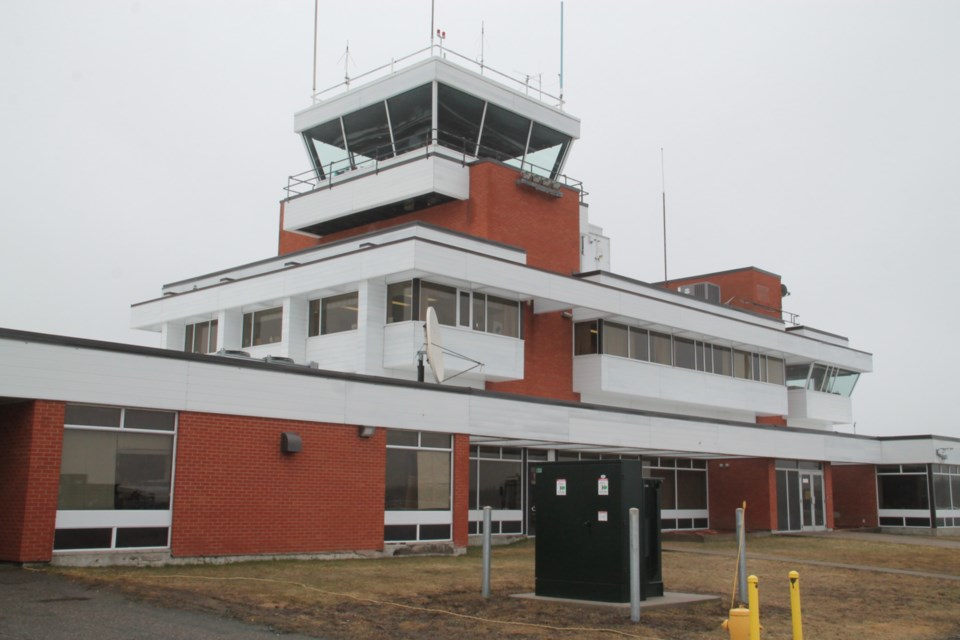
    OTTAWA,ON, April 15, 2021 /CNW/ – NAV CANADA confirmed today that it will maintain air traffic control service to Canadian communities, including Fort McMurray AB, Prince George BC, Regina SK, Saint-Jean QC, Sault Ste. Marie ON, Whitehorse YT and Windsor ON.

    Last fall, NAV CANADA launched 29 aeronautical studies in an effort to safely streamline its operations, ensuring that air navigation services align with market demand. After considerable consultation with airlines, airports, industry associations, local officials and internal stakeholders, NAV CANADA has elected to limit changes to services across the country. 

    NAV CANADA is committing that there will be no site closures at air traffic control towers or flight service stations across the country. In addition, the Company will suspend aeronautical studies currently underway related to remote or northern locations until further notice.

    “Stakeholder engagement is at the heart of NAV CANADA’s aeronautical study process. The valuable input we have received indicates that a balanced approach is warranted as the industry navigates the ongoing pandemic. We are proactively taking these steps to maintain a consistent level of service as the aviation industry and our many partners shift their focus to recovery,” said Ray Bohn, President and CEO.

    The aeronautical studies, which are still in progress, will consider other alternatives to safely streamline operations, including changes to hours of operation. Aeronautical studies that were related to hours of operation from the outset or that are related to Remote Aerodrome Advisory Services will also continue, except for those pertaining to remote or northern locations.

    To enhance stakeholder awareness and input, NAV CANADA will be undertaking a Notice of Proposal process that will afford stakeholders an additional opportunity to provide feedback on NAV CANADA’s specific recommendations.  

    NAV CANADA remains unwavering in its commitment to safety, and any changes to the delivery of our services will be first and foremost evaluated in this context. The Company will continue to provide the air navigation services required to support industry today and throughout recovery.

    Quick Facts

    • A private, non-profit corporation, NAV CANADA provides air traffic control, airport advisory services, weather briefings and aeronautical information services for more than 18 million square kilometers of Canadian domestic and oceanic airspace.
    • Under the Civil Air Navigation Services Commercialization Act, NAV CANADA recovers its operating expense through service charges from its customers on a breakeven basis. Its customers include airlines, air cargo operators, air charter operators, air taxis, helicopter operators, and business and general aviation.
    • Aeronautical Studies consider all relevant factors, including traffic volume, mix and distribution throughout the day; weather; airport and airspace configuration; surface activity; and the efficiency requirements of operators using the service. Formal consultation with stakeholders is central to all Aeronautical Studies.
    • NAV CANADA’s safety record is irrefutably one of the best in the world amongst air navigation service providers. We have achieved this record based on a regulated decision-making approach with safety at the very core of all that we do.

    About NAV CANADA

    NAV CANADA is a private, not-for-profit company, established in 1996, providing air traffic control, airport advisory services, weather briefings and aeronautical information services for more than 18 million square kilometres of Canadian domestic and international airspace.

    The Company is internationally recognized for its safety record, and technology innovation. Air traffic management systems developed by NAV CANADA are used by air navigation service providers in countries worldwide.

  • WestJet leads domestic recovery with the addition of 11 new routes


    Airline’s investments in Western Canada support travel and tourism in anticipation of summer demand 

    CALGARY, AB, March 26, 2021 /CNW/ – WestJet today announced 11 new domestic routes across Western Canada. The routes will offer new nonstop service for 15 communities across Alberta, British Columbia, Saskatchewan, Manitoba and Ontario. The enhancements follow an announcement made earlier in the week to return previously suspended service to Atlantic Canada and Quebec City.  

    A message from WestJet President and CEO Ed Sims, on the airline’s commitment to Canada’s safe restart 

    “As we look to the coming months with cautious optimism, we know our restart agenda will be pivotal to Canada’s economic recovery,” said Ed Sims, WestJet President and CEO. “Stimulating air travel benefits all Canadians and supports those hardest hit; with one in every 10 Canadian jobs tied to travel and tourism, the ripple effect benefits our whole country.”  

    The new routes include service between Toronto (YYZ) and Comox (YQQ); between Ottawa (YOW) and Victoria (YYJ) and eight new routes connecting the prairie provinces to British Columbia tourism destinations, such as Regina (YQR) to Kelowna (YLW). Full schedule details and start dates are outlined below. 

    “We are at an inflection point; one that is buoyed by the rollout of vaccines, months of learning how to take appropriate precautions, and a view to Canada’s beautiful summer months that allows us to spend more time outdoors,” continued Sims. “If Canadians were to shift two-thirds of their planned international-leisure travel spend towards domestic tourism, it would help sustain 150,000 jobs and accelerate recovery by one year, all while seeing what Canada has to offer.” 

    New routes: 

    Route Frequency Effective from 
    Toronto – Fort McMurray 2x weekly (Wed, Sun) June 6, 2021 
    Kelowna – Saskatoon 2x weekly (Thu, Sun) June 24, 2021 
    Kelowna – Regina 2x weekly (Thu, Sun) June 24, 2021 
    Saskatoon – Victoria 2x weekly (Thu, Sun) June 24, 2021 
    Winnipeg – Victoria 3x weekly (Thu, Sat, Sun) June 24, 2021 
    Edmonton – Kamloops 2x weekly (Thu, Sun) June 24, 2021 
    Edmonton – Penticton 2x weekly (Thu, Sun) June 24, 2021 
    Edmonton – Nanaimo 2x weekly (Fri, Sun) June 25, 2021 
    Prince George – Abbotsford 2x weekly (Fri, Sun) June 25, 2021 
    Ottawa – Victoria 1x weekly (Sat) June 26, 2021 
    Toronto – Comox 1x weekly (Sat) June 26, 2021 

    About WestJet 

    In 25 years of serving Canadians, WestJet has cut airfares in half and increased the flying population in Canada to more than 50 per cent. WestJet launched in 1996 with three aircraft, 250 employees and five destinations, growing over the years to more than 180 aircraft, 14,000 employees and more than 100 destinations in 23 countries, pre-pandemic.

    Since the start of the pandemic the WestJet Group of Companies has built a layered framework of safety measures to ensure Canadians can continue to travel safely and responsibly through the airline’s Safety Above All hygiene program. During this time, WestJet has maintained its status as one of the top-10 on-time airlines in North America as named by Cirium.

    For more information about everything WestJet, please visit westjet.com

  • VIDEO: Large Royal Canadian Air Force aircraft flies over heads of Prince George residents

    From Prince George Matters – link to source story

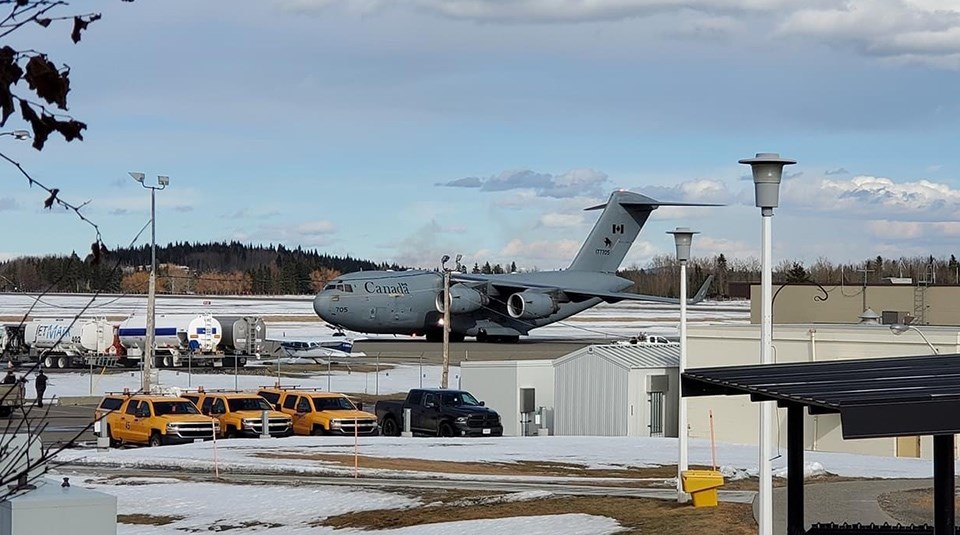
    CC-177 Globemaster III was part of cross-country stop at YXS2 days ago 

    By: Kyle Balzer | 8 March 2021

    Ken Flanagan - CC-177 Globemaster III Prince George YXS Royal Canadian Air ForceRoyal Canadian Air Force CC-177 Globemaster III trained in Prince George as YXS Airport was a stop on its cross-country training. Ken Flanagan

    If you live near the Prince George Airport, you likely heard the rumblings of a behemoth bird taking flight across the northern sky.

    This past weekend, the Royal Canadian Air Force (RCAF) and Canadian Armed Forces (CAF) brought its CC-177 Globemaster III to YXS as part of a cross-country training session for its 429 squadron members, all following COVID-19 protocols.

    https://youtube.com/watch?v=cdp8u-P83sk

    Pilots were using the transport aircraft for low-approach maneuvers, as well as take-offs and landings.

    Residents were able to capture photos and video in awe of the big plane, which is based out of 8 Wing Trenton (Ontario).

    According to the CAF, this training is also essential for maintaining skills, so aircrew members are ready to safely execute missions around the world, often under challenging conditions.

    The military service adds it’s important these proficiencies are maintained in Canada so the squadron can also be ready in potentially life-threatening situations.

    – with files from Hanna Petersen, PrinceGeorgeMatters

    https://www.facebook.com/FlyYXS/posts/3673070126074950
  • Safely-relocated bull moose strengthens partnership between UNBC, Prince George Airport

    From Prince George Matters – link to source story

    Researcher says specific species down 70 per cent in local area

    By: Kyle Balzer | 4 March 2021

    Bull moose - UNBC Prince George AirportUNBC researchers and Prince George Airport Authority staff collaborated to get this moose to safety after it entered the airport’s property.UNBC
    A long-term collaboration has recently proven its effectiveness in the community when it comes to preserving wildlife and ensuring the safety of others.

    On Jan. 19, 2021, UNBC and the Prince George Airport Authority (PGAA) teamed up to safely move and relocate a bull moose that wandered on the airfield side of a YXS security fence.

    A series of cameras set up in the area by researcher Dr. Roy Rea first alerted the post-secondary of the endangered animal roaming near airport on Nov. 28, 2020.

    “A moose is certainly something we don’t want to have walk in front of an aircraft,” said Rea in a statement this morning (March 4).

    “Moose populations in this area are down 70 per cent and we’d rather like to see that animal survive and breed instead of being turned into hamburger.”

    The moose was ultimately moved outside the fence safely thanks to additional consultation from Yellowhead Helicopters, the BC Conservation Officer Service and government biologists, in case other measures needed to be taken pending the animal’s cooperation.

    UNBC says its joint partnership with PGAA has only strengthened as a result of the operation as wildlife monitoring and research projects have been conducted between the two since 2007.

    Rea explains the cameras were initially set up in 2009 and have kept a watchful eye on a number of animals potentially halting airport operations, including bears, lynx and coyotes.

    When he was alerted via cellphone, he immediately contacted PGAA Operations Manager Trevor Gust, coming up with plans to safely move the moose back to a nearby forested area.

    “We have a wildlife program in place and there is a requirement that we are audited by Transport Canada to make to ensure that we’re doing our due diligence where wildlife are concerned,” Gust adds in the same release. 

    “Having [UNBC] involved is a tremendous help because the researchers are able to do a lot of the leg work and then we are able to show Transport Canada all the work that has been done.”

    With Rea and his team keeping an eye from afar on the moose’s movements, PGAA crews brought out firetrucks and were set to use sirens in case it walked towards the runways.

    The moose eventually walked through a southwest-corner fence opening they created, using quads to gently motivate it to leave the airfield.

    UNBC says a gate left open in a storage compound is likely what invited the moose onto the airport property, but Rea is grateful the opportunity presented itself.

    “It’s a wonderful opportunity for students to work in the areas in which they’re interested, like wildlife ecology,” Rea adds in noting PGAA provides funding to UNBC in gaining experience with related equipment. 

    “They can take all of that information and put that data together in such a way that it can be used by the airport for their wildlife monitoring program as well as for publications to help other airports develop similar methods.”

    For more information on the moose relocation efforts and of UNBC’s partnership with Prince George’s Airport, you can visit the school’s website.

    https://www.facebook.com/UNBC/posts/10159127197275119

  • Sault Airport one of seven under review by Nav Canada

    From SooToday – link to source story

    Study of air traffic service and aviation weather requirements expected to be presented to Transport Canada for safety review this spring

    By: SooToday Staff | 23 Febrauary 2021

    20200301-Sault Ste. Marie Airport, winter, stock-DT-01Sault Ste. Marie Airport file photo. Darren Taylor/SooToday

    Nav Canada, the non-profit body that runs the country’s civil air navigation service, is currently reviewing seven airport towers in small Canadian cities, including Sault Ste. Marie.

    Others under review are those located in St-Jean, Que.; Windsor, Ont.; Regina, Sask.; Fort McMurray, Alta.; Prince George, B.C.; and Whitehorse, Yukon.

    At the heart of each review is whether air traffic at the airports warrants having a control tower as opposed to an advisory service for pilots, reports the Canadian Press.

    In a Terms of Reference (TOR) issued in November of last year, Nav Canada explained that “the total annual aircraft movements have ranged from 55,225 to 65,228. These movements are either below or are at the lower levels of the established guidelines for the provision of Airport Control Services based on the Nav Canada Policy Delivery of Air Navigation Services.”

    “We have to operate the right service, at the right place, at the right time,” Jonathan Bagg, Nav Canada’s director of stakeholder and industry relations, told the Canadian Press. “The COVID-19 pandemic does give us additional stimulus because of the financial environment; however, the studies are warranted regardless of COVID-19.”   

    The aeronautical study to review air traffic service and aviation weather requirements at the Sault Airport is expected to be presented to Transport Canada for safety review this spring.

    “A strong system of airports is essential to supporting recovery from COVID-19 for our travel and tourism sector, as well as our trade-based regional and national economies,” Terry Bos, the Sault Ste. Marie Airport Development Corporation’s president and CEO, said in a news release issued on Feb. 9. “Canada’s airports and our air sector partners want to play a leading role in this recovery but may not be able to effectively do so without intervention by government.”

    Earlier this month, the Sault Ste. Marie Airport Development Corporation reported record low passenger levels.

    Passenger traffic dropped by more than 89 per cent in January from the previous year.

    Also in January of this year, the airport announced a 41 per cent reduction in staff as flights were cut due to the ongoing pandemic.

    Today, the Canadian Press reports that aviation is among the hardest hit industries as federal travel restrictions continue and public health officials discourage travelling.


  • Airline service to Fort Nelson, B.C., to resume with funding from governments

    From CBC News – link to source story

    Provincial, federal governments step up to fund twice-weekly Prince George flights after lobbying campaign

    Karin Larsen · CBC News · Feb 03, 2021

    Flights into and out of Fort Nelson will resume on Feb. 18, Central Mountain Air has announced. (Simon Charland-Faucher/Radio-Canada)

    Flights to Fort Nelson, B.C., are set to resume later this month after Central Mountain Air announced earlier it was temporarily cutting the only airline service to the town of 3,500 in the province’s northeast corner. 

    In a media release, Central Mountain Air said it will resume twice-weekly service between Prince George and Fort Nelson on Feb. 18. with more flights added as pandemic travel restrictions ease and demand grows.

    The release said the provincial and federal government assisted in the renewal of the flights, but no dollar figure was given.

    Fort Nelson Mayor Gary Foster said the city had been lobbying both levels of government, pointing out that the federal government made promises on two occasions to support regional airlines during the pandemic.

    “We’re just ecstatic this is coming along and that the funding is forthcoming,” he said.

    Foster said without airline service, it would be impossible for residents to get timely medical care outside the community, or for medical professionals to travel to the town.

    “Fort Nelson is fairly remote. We’re four hours away from the nearest and largest community, which is Fort St. John … and about nine hours from Prince George. So you can imagine travelling the road if you need medical care, an operation or cancer treatment.”

    Central Mountain Air had originally announced a three-month total shutdown of service, between Feb. 3 and May 3.

    The revival of the service means the shutdown will now only last two weeks.

    Pre-pandemic, Fort Nelson had a daily flight in and out of the city.

    With files from Andrew Kurjata

  • Fort Nelson in northeastern B.C. loses flight service for at least 3 months amid COVID slump

    From CBC News – link to source story

    Central Mountain Air suspends flights between Fort Nelson and Prince George starting Feb. 3

    CBC News · Posted: Jan 20, 2021

    Central Mountain Air will suspend its route between Prince George and Fort Nelson starting in early February, leaving the small Northern Rockies community with no scheduled flight service for at least three months. (Central Mountain Air)

    Central Mountain Air announced Tuesday it is suspending flights between Fort Nelson, B.C., and the northern hub of Prince George, leaving the small northeastern community with no flight services for at least three months. 

    The Smithers-based airline said flights between Fort Nelson — a municipality of over 3,000 people — and Prince George will not run from Feb. 3 to May 3, at the earliest. 

    Travellers from the Northern Rockies town will need to drive four hours to the nearest airport in Fort St. John, B.C., or continue for a nine-hour drive to Prince George.

    Central Mountain Air also suspended flights between Prince George and Kamloops in the souther Interior from Feb. 3 to Apr. 5.

    “Devastating declines in travel and extended provincial health advisories against non-essential travel have necessitated a significant scaling back of our scheduled operations for the foreseeable future,” wrote Central Mountain Air CEO Bob Cummings in a statement. 

    Cummings said it’s a hard decision to cut back services for remote communities.

    “I feel horrible,” he said to CBC News. “The air transportation link for medical treatment, keeping a base level of the economy going for the resource industry, as well as cargo, medical supplies, mail … these are crucial links for these communities.” 

    Fort Nelson Mayor Gary Foster says the flight suspension is particularly challenging for people seeking medical services out of town, as well as medical professionals coming to provide services to the small community.

    “They would have to spend a day driving [from the airport in Fort St. John or Prince George] to the Northern Rockies and driving a day out,” he said. “Plus they would have a rental car. They would have to pay for the length of time they’re here in Fort Nelson.”

    The nearest scheduled airline service for residents of Fort Nelson, B.C., is now a four-hour drive away at Fort St. John. (Simon Charland/CBC)

    Last Friday, Prime Minister Justin Trudeau ordered the new federal Transport Minister Omar Alghabra to make regional airlines a priority along with supporting regional economic development.

    Foster says federal and provincial governments should step in to support regional airlines like Central Mountain Air amid the economic woes during the pandemic, but he’s not optimistic other Canadian airlines are able to fill in the gap to provide services to Fort Nelson.

    “I think they’re all running for cover and they are worried about just staying afloat until the end of this pandemic,” he said. 

    Both Air Canada and WestJet have also slashed services because of plummeting demand due to COVID-19 travel restrictions. Starting Saturday, Air Canada will cut all its flights from two other B.C. destinations: Prince Rupert on the North Coast and Kamloops.

    With files from Andrew Kurjata and Christine Coulter

  • Central Mountain Air to suspend key regional routes

    Continued lack of government support adversely affecting vital air service

    Airline calls on communities to engage all levels of government to support essential air services

    SMITHERS, BC, Jan. 19, 2021 /CNW/ – Today, Central Mountain Air (CMA) announced it will suspend service on three regional routes. The routes will be suspended from February 3, 2021, to at least April 5, 2021. This action by CMA follows their decision earlier this month to suspended service from Prince George to Fort St. John as the company continues to deal with the crushing economic impact of the pandemic. No other airline operates these affected routes.

    “Devastating declines in travel and extended provincial health advisories against non-essential travel have necessitated a significant scaling back of our scheduled operations for the foreseeable future,” commented Bob Cummings, Central Mountain Air’s CEO. “The federal government has been promising for almost a year that help is on the way to support these essential air services, but no such support has been received or clearly outlined. Our customers and the communities we serve are bearing the brunt of this inaction. In addition to supporting the local economies with the transport of essential workers, our airline and its dedicated staff fly customers to medical treatments and transport medical supplies, mail, and other vital cargo.

    Route Changes

    BetweenDates
    Fort Nelson / Prince GeorgeSuspended February 3 to earliest May 3
    Kamloops / Prince GeorgeSuspended February 3 to earliest April 5
    Edmonton* / High LevelSuspended February 3 to earliest May 3
    Vancouver / KamloopsStarts April 5, 2x weekly
    *Note: Edmonton has a charter base with an opportunity for ad hoc charter requests.”

    Recognizing the crucial link our airline provides to the communities we serve, CMA continued to operate these routes, with one short suspension, since the start of the pandemic (March April 2020) while sustaining losses. For more than ten months, CMA leadership has sought to engage the federal government in support of airports and airlines, particularly in more remote areas. However, the promised necessary financial support has not materialized. At this time, without direct government support to assist in maintaining operations until demand resumes, CMA can no longer continue the provision of these essential air services.

    “We also need the continued support of the communities we serve,” continued Bob Cummings. If you rely on our services and would like to voice your view that scheduled air services are critical to your community, we ask you to contact your MLA, MP, Premier or the federal Minister of Transport. With government support, we would be proud to continue to serve our customers and maintain crucial airline connectivity in British Columbia and Alberta until demand returns. If there is any chance to save vital air service to these communities, action must be urgently undertaken.”

  • NAV CANADA looks to streamline operations

    OTTAWA, Nov. 24, 2020 (GLOBE NEWSWIRE) — NAV CANADA continues to take steps to safely streamline its operations to help preserve the sustainability of the country’s air navigation system. The Company is moving forward with additional adjustments to its services and will be launching level of service reviews for six air traffic control towers. This includes completing a rigorous, safety-focused review of air traffic to determine whether airport advisory services should be offered in lieu of air traffic control.

    NAV CANADA must continue to fulfill its commitment to efficiently run Canada’s air navigation system, ensuring that the services supplied align with market demands. The following sites were identified for review as a result of long-term air traffic levels, including prior to the pandemic:

    • Fort McMurray Tower, AB
    • Prince George Tower, BC  
    • Regina Tower, SK   
    • Sault Ste. Marie Tower, ON  
    • Whitehorse Tower, YT  
    • Windsor Tower, ON

    Aeronautical studies apply a safety-focused and Transport Canada regulated process, which NAV CANADA has followed in support of its globally recognized safety record for more than 20 years. This rigorous, systematic approach provides for full consultation with all affected stakeholders, with the key factor being safety.

    Quick Facts

    • A private, non-profit corporation, NAV CANADA provides air traffic control, airport advisory services, weather briefings and aeronautical information services for more than 18 million square kilometers of Canadian domestic and oceanic airspace.
    • Under the Civil Air Navigation Services Commercialization Act, NAV CANADA recovers its operating expense through service charges from its customers on a breakeven basis.
    • NAV CANADA’s provides services to airlines, air cargo operators, air charter operators, air taxis, helicopter operators, and business and general aviation.
    • Aeronautical studies consider all relevant factors, including traffic volume, mix and distribution throughout the day; weather; airport and airspace configuration; surface activity; and the efficiency requirements of operators using the service. Formal consultation with stakeholders is central to all aeronautical studies.
    • NAV CANADA’s safety record is irrefutably one of the best in the world amongst air navigation service providers. We have achieved this record based on a regulated decision-making approach with safety at the very core of all that we do.