Category: Air Canada

  • Air Canada, WestJet raising checked baggage fees for lowest-fare passengers

    MONTREAL – THE CANADIAN PRESS – 28 August 2018

    Many Canadians will be forced to spend a little more to travel after Air Canada and WestJet Airlines Ltd. said they are increasing fees for passengers to check their bags.

    The country’s two largest airlines are raising the fee for the first checked bag to $30 from $25, and for the second bag to $50 from $30.

    The moves were made swiftly after major U.S. airline JetBlue Airways Corp. hiked its fees for checked bags and to change a ticket.

    “This is the first change since 2014 and will help offset overall increasing costs and keep overall ticket prices competitive,” Air Canada spokeswoman Isabelle Arthur wrote in an email.

    The new baggage fees apply on flights across Canada, to and from the United States, the Caribbean and Mexico, departing on or after Oct. 5.

    WestJet’s changes apply on flights starting Oct. 1 for domestic bookings made as of last Friday, and as of Tuesday on flights to the U.S. and international destinations.

    “By raising fees for optional services, such as checked bags, we can continue to maintain the lower fares our guests expect,” added WestJet spokeswoman Lauren Stewart.

    She said its fares and fees allow passengers to pay for services that matter most to them.

    The fees apply to the lowest fare classes at both airlines.

    Air Canada economy flex and economy comfort fares will continue to receive a first checked bag free of charge as will elite members and those who booked Air Canada Vacations packages. Military personnel with identification have up to three free checked bags, regardless of destination.

    Fees are waived for WestJet Plus passengers, gold and silver rewards members or those booking with RBC World Elite Mastercards.

    Porter Airlines says its fees aren’t changing.  Air Transat and Sunwing couldn’t be immediately reached for comment.

    Airlines have been adding fees for a decade and now charge for seats with more legroom, early boarding, upgrades, food and beverages, entertainment and wireless access. Air Canada earned more than $1 billion from these payments last year while WestJet collected about $440 million.

    The world’s top 10 airlines collected US$29.7 billion in revenues from ancillary fees last year, up from US$2.1 billion a decade ago, according to IdeaWorksCompany, a U.S. research company that tracks airline revenue.

  • Air Canada Announces Appointment of Ferio Pugliese as Senior Vice-President, Government Relations and Regional Markets

    MONTREAL, Aug. 24, 2018 /CNW Telbec/ – Air Canada today announced the appointment of Ferio Pugliese as Senior Vice-President, Government Relations and Regional Markets effective August 20, 2018. Mr. Pugliese is succeeding Kevin C. Howlett, Senior Vice-President, Government Relations and Regional Markets, who will be retiring in November after 45 years of dedicated service. Mr. Pugliese will be based in Toronto, and will report directly to Calin Rovinescu, President and Chief Executive Officer.

    “As a global carrier connecting 64 Canadian cities and communities to more than 220 worldwide markets on six continents, one of Air Canada’s key priorities is continuing to outreach and strengthen the partnerships we have in the cities and communities we fly to, and our relationships with all levels of government in Canada. Ferio’s solid, diverse experience from several Canadian organizations is well-suited to oversee these important relationships, and to also lead the strategic direction of Air Canada’s regional operations including our relationships with our regional carriers operating on Air Canada’s behalf. I take this opportunity to congratulate Kevin on his upcoming retirement this fall, and thank him for his valuable and tireless work,” said Mr. Rovinescu.

    Prior to joining Air Canada, Mr. Pugliese was previously Executive Vice-President, Customer and Corporate Affairs at Hydro One Inc. He has also held senior leadership positions at other Canadian companies including WestJet, WestJet Encore and Catalyst Paper Corporation.

  • Air Canada Expands Acceptance of Alipay and WeChat Pay to North American and Hong Kong Websites

    Air_Canada_Logo
    Offers additional convenience for international customers, supports airline’s global growth

    MONTREAL, Aug. 21, 2018 /CNW Telbec/ – Air Canada today announced that Alipay and WeChat Pay as payment choices are now available when booking on the carrier’s North American and Hong Kong websites. Air Canada is the first Canadian airline and is amongst the first North American carriers to offer these secure payment options in North America.

    “Since last fall, our customers around the world have been able to use their preferred local method of payment when purchasing flights on aircanada.com in their home country, including Alipay and WeChat Pay options in China. With increasing numbers of customers purchasing tickets in North America and Hong Kong looking to use these alternate forms of payment, we are very pleased to expand AliPay and WeChat Pay options to aircanada.com bookings in Canada, the USA and Hong Kong. This is another important element of our global expansion strategy as we increase our focus on providing our international customers with their preferred method of payment when purchasing outside China,” said John MacLeod, Vice President, Global Sales and Alliances at Air Canada.

    Air Canada processes alternative and local payment methods via a single gateway. This makes it easy for the airline to expand, adding new payment methods as needed without requiring individual contracts, or additional development work. Air Canada’s customers are able to transact locally on aircanada.com using iDeal in the Netherlands, Sofort and Giropay in Germany, Bancontact in Belgium, Poli in Australia, Alipay plus WeChat Pay in China, Canada, the USA and Hong Kong.

  • Air Canada, TD, CIBC, Visa and Aimia Reach Agreement in Principle for Acquisition of Aeroplan Loyalty Business

    • Purchase price consists of $450 million in cash and the assumption of approximately $1.9 billion of Aeroplan Miles liability
    • Agreement in principle was unanimously approved by Aimia’s Board of Directors and is supported by Mittleman Brothers
    • Transaction would provide value for Aimia and its shareholders and continuity for Aeroplan members and customers of Air Canada, TD, CIBC and Visa
    • Transaction subject to negotiation of definitive agreements and other conditions; completion expected fall 2018

    TORONTO, Aug. 21, 2018 /CNW Telbec/ – Air Canada, The Toronto-Dominion Bank (“TD”), Canadian Imperial Bank of Commerce (“CIBC”), Visa Canada Corporation (“Visa”) (collectively, “the Consortium”) and Aimia Inc. (“Aimia”) announced today that they have entered into an agreement in principle for the acquisition of Aimia’s Aeroplan loyalty business.

    “We are pleased to see that an agreement in principle has been reached as Aeroplan members can continue to earn and redeem with confidence. This transaction, if completed, should produce the best outcome for all stakeholders, including Aeroplan Members, as it would allow for a smooth transition to Air Canada’s new loyalty program launching in 2020, safeguarding their miles and providing convenience and value for millions of Canadians,” said Calin Rovinescu, President and CEO of Air Canada, on behalf of the consortium.

    The transaction is expected to deliver significant value to Aimia’s stakeholders and the agreement in principle was approved unanimously by Aimia’s Board of Directors upon recommendation by its Special Committee of independent directors. Mittleman Brothers, LLC, Aimia’s largest shareholder who owns approximately 17.6% of Aimia’s common shares, has provided a lock-up and support agreement under which it has agreed to vote in favour of the proposed transaction.

    The aggregate purchase price consists of $450 million in cash and is on a cash-free, debt-free basis and includes the assumption of approximately $1.9 billion of Aeroplan Miles liability.

    The transaction is subject to the satisfactory conclusion of definitive transaction documents, Aimia shareholder approval, and certain other conditions, including due diligence, receipt of customary regulatory approvals and completion by the Consortium of credit card loyalty program and network agreements for future participation in Air Canada’s new loyalty program.

  • Higher fuel, labour costs push airfare skyward, boosting rise in inflation

    Monday, August 20, 2018 – By: The Canadian Press

    MONTREAL — Rising fuel costs drove a 28% year-over-year rise in the price of airfare and helped push inflation to its highest level since 2011.

    The leap in airfares – which moved in rough alignment with a 25-per-cent increase in the price of gasoline – tacked on 0.3 percentage points to overall price growth of 3% over the past year, said TD Economics senior economist James Marple.

    “It’s not surprising to see that eventually being passed on to consumers.”

    The heads of Air Canada and WestJet Airlines Ltd. recently warned that costlier jet fuel would be offset with higher fares.

    Air Canada shelled out 32% more on fuel in the first half of 2018 – $1.79 billion – compared with the same period last year. Its Calgary-based competitor spent $583 million on jet fuel in the first six months of 2018, 27% more than its fuel costs in the first two quarters of 2017.

    However, gas isn’t the only reason passengers may feel gouged at the gate.

    Statistics Canada analyst Taylor Mitchell pointed to a jump in demand for flights to Europe and Asia last month, which may have pushed airfares higher.

    “We noticed that that coincides with the World Cup,” Mitchell said. The soccer competition was held in Russia and ran through mid-July.

    Mitchell also noted that a StatsCan methodology change last March skews year-over-year comparisons, with the agency now using more data to capture the extent of peak travel.

    James Marple called the inflation ramp-up a “one-off” that reflects the impact of higher fuel and labour costs on the airline industry.

    “The size of the gain in July can’t have been just a fuel cost thing,” the economist said.

    The updraft in fares occurred in spite of the recent rise of ultra-low-price upstarts such as Edmonton-based Flair Airlines and WestJet offshoot Swoop, as well as Air Canada’s Rouge unit.

    “If it wasn’t for all this competition in a lot of these big marketplaces, the impact of rising fuel prices or general upward pressure on labour rates in a highly unionized sector might make the price go up more than they did,” said Robert Kokonis, president of Toronto-based consulting firm AirTrav Inc.

  • NO PENALTIES – Airlines allow changes to flights affected by wildfires

    20 AUG 2018: The BC government declared a state of emergency Wednesday in response to more than 500 fires that have burned through the province’s firefighting capacity and triggered international support. WestJet and Air Canada have announced more flexible flight options for passengers booked to fly in or out of some cities in BC, that have been affected by the wildfires.

    WestJet passengers scheduled to travel to or from Kamloops, Kelowna, Penticton, Prince George or Terrace until Aug. 22 can cancel or rebook their flights without a penalty fee, the Calgary-based airline said Thursday.

    Air Canada tickets for flights up until Aug. 22 heading in or out of six cities in the BC interior can be changed to another date before Sept. 1. free of charge, the Montreal-based airline said.

    Firefighters from Australia, New Zealand and Mexico are now taking part in the fight.

    Ottawa announced Monday it would deploy 200 soldiers and several aircraft to help battle the fires, which have prompted evacuation orders covering more than 1,500 properties and affecting about 3,000 people.

    Canadian Forces personnel joined the 3,400 firefighters already fighting the summer infernos. About 150 new fires ignited across BC last weekend, according to the BC government.

    The state of emergency applies to the entire province and ensures federal, provincial and local resources can be delivered in a coordinated manner, BC Public Safety Minister Mike Farnworth said Wednesday.

    But humans can only do so much to douse the flames, he said.

    “The best thing we can hope for is a change in weather: winds to blow smoke away, a good old-fashioned drenching of rain to extinguish fires and improve air quality,” Farnworth said.

    More than 1,800 forest fires have been recorded since the season began on April 1, charring nearly 3,800-square kilometres of timber and bush, the wildfire service said.

  • Canada’s biggest airline seeks finance ministry approval to form insurance firm

    MONTREAL – Air Canada is seeking finance ministry approval to form its own life insurance company as a gateway to the annuities market and a hedge against looming pension payouts.

    Air_Canada_LogoA spokesperson says the airline aims to shore up pension risks by buying annuities from Canadian insurers and reinsuring the fixed payments through an insurance subsidiary.

    The Montreal-based carrier plans to purchase the annuities over several years, starting in 2019.

    The country’s largest airline currently doles out $725 million in annual pension payouts. That number is projected to grow to more than $900 million in a decade.

    Air Canada says the national market is too small to bear such big annuities purchases.

    The airline’s defined benefit pension plans cover nearly 53,000 employees — roughly half of whom are retired — and carry a solvency surplus of $2.6 billion.

  • Air Canada Announces Departure of Benjamin Smith, President, Airlines and Chief Operating Officer

    Air_Canada_LogoMONTREAL, Aug. 16, 2018 /CNW Telbec/ – Air Canada today announced that Benjamin Smith, President, Airlines and Chief Operating Officer, has advised the Corporation that he will resign his position effective August 31, 2018 to accept a role as chief executive officer at an European-based global airline.

    “We wish Ben well in his future endeavours and congratulate him on his appointment. On behalf of our Board of Directors, our executive team and our 30,000 employees, I thank Ben for his significant contributions in many various roles at Air Canada over the past two decades,” said Calin Rovinescu, President and Chief Executive Officer.

    “There have been many architects of Air Canada’s highly successful transformation, and our deep and highly experienced leadership team will continue to deliver on our global ambitions, achieve our targets and drive our operational performance well into the future,” added Mr. Rovinescu.

  • Air Canada exec reportedly on board as Air France-KLM CEO would face labour headwinds

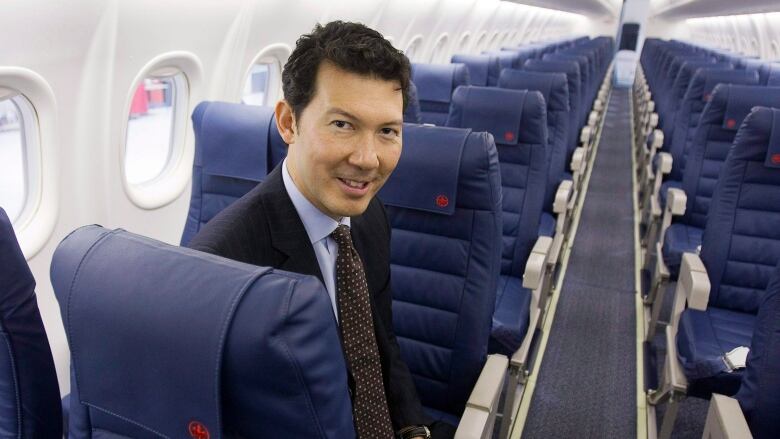
    Several French news outlets have reported that Air Canada chief operating officer Ben Smith, seen here in an April 2011 photo, is poised to be named the new CEO of Air France-KLM at a board meeting Thursday. (Ryan Remiorz/Canadian Press)
    Two French airline unions blasted Air France-KLM this week after reports the Franco-Dutch carrier will name an Air Canada executive as its new CEO.

    Several French news outlets have reported Air Canada chief operating officer Ben Smith is poised to be placed in the pilot’s seat at a board meeting Thursday.

    Smith, who has acted as chief negotiator during labour talks for Air Canada’s low-cost Rouge unit, would replace former Air France-KLM CEO Jean-Marc Janaillac, who quit more than three months ago when staff turned down his offer of a pay deal aimed at halting a wave of strikes.

    Philippe Evain, head of Air France’s main pilot union, accused the board in a tweet Tuesday of poor decision-making and handing over the keys to the company to a North American executive.

    A union representing Air France ground staff questioned Smith’s potential pay package, which the French newspaper Liberation reported will hit 3.3 million euros a year.

    The criticism comes amidst growing labour turmoil on the tarmac in Europe, as pilots at Air France, Brussels Airlines and Ryanair have all staged work stoppages in recent months.

    A spokesperson for Air France-KLM declined to confirm reports of a new CEO and said the appointment process was ongoing.

  • Air Canada prepares rouge subsidiary for ULCC competition

    From Air Transport World – 9 August 2018 – 

    Rouge-Boeing-767-300-Coastal-5As the Canadian ULCC market heats up, Air Canada said it is prepared to leverage the significant flexibility of its rouge subsidiary to ward off competition, from adding flights in major domestic markets to re-configuring aircraft to match rivals’ all-economy offerings.

    “We have been preparing to ensure that we have all the tools necessary to offset [low-cost competition] and ensure that we are not negatively impacted,” Air Canada passenger airlines president Ben Smith said.

    Set up five years ago as a leisure-destination operation, rouge’s network is heavily transborder and international, with only a handful of year-round and seasonal routes within Canada. None of them link any of the country’s six largest metropolitan areas—Toronto, Montreal, Vancouver, Calgary, Ottawa and Edmonton—part of the carrier’s strategy to preserve mainline margins.

    Calgary-based WestJet and its ULCC subsidiary Swoop are following a similar network strategy, but unlike rouge’s two-class aircraft, Swoop operates 189-seat all-economy Boeing 737-800s.

    Fast-growing ULCC Flair Airlines is taking the strategy a step further, operating single-class, 158-seat 737-400s on popular domestic routes such as Toronto-Calgary and Vancouver-Calgary. The Edmonton-based carrier’s recent announcement to move its Hamilton services to Toronto will make it even more prominent, and it plans to follow rouge and Swoop into transborder services.

    While Montreal-based Air Canada set up rouge as a hybrid low-cost leisure carrier, the company has flexibility to transform its subsidiary to meet market needs, thanks in part to a 2017 amendment to its pilot agreement. The deal lifted Rouge’s fleet-size cap of 50—25 widebodies and 25 narrowbodies—by permitting more narrowbodies based on Air Canada’s mainline operation and permits rouge aircraft to replace regional feeder flying.

    Air Canada is already taking advantage of the narrowbody cap’s removal. Its 53-aircraft fleet includes 22 Airbus A319s and six A321s, and it plans to add three A320s next year. It also is evaluating its rouge deployment strategy in light of shifting market dynamics.

    “We have not deployed one of our options, which is rouge on any of the major markets. We can do that,” Smith said. “We can also modify the rouge model …. We can densify the rouge aircraft to bring down the CASM. So, a lot of flexibility.”

    Usage of the A320s will be determined by the best opportunities. While the strategy could change, Smith said three options are being considered: adding domestic capacity, flying attractive “southern” routes to Florida, Mexico, and the Caribbean, or replacing regional-feeder flying.

    “We’re quite pleased with the position we’re in,” he said.

    , sean.broderick@aviationweek.com